

Corten Steel Sculpture: Properties, Fabrication Techniques, and Contemporary Artistic Applications
Corten steel sculpture has become one of the most recognizable expressions of contemporary sculptural practice, particularly in public art, architectural interventions, and large-scale outdoor installations. Its industrial aesthetic, exceptional structural performance, and naturally evolving surface make it a compelling material for artists and architects seeking both technical durability and strong visual identity.
Unlike conventional steel, where oxidation is generally considered deterioration, corten steel is specifically engineered to develop a stable protective oxide layer. This controlled weathering process protects the internal structure while creating the material’s distinctive reddish-brown surface.
This dual technical and aesthetic character explains why corten steel sculpture has become increasingly prominent in modern artistic production.
However, beyond its visual appeal, corten steel requires careful fabrication, engineering, and environmental consideration. Its use is not merely stylistic—it is a strategic technical decision.
Understanding corten steel sculpture means examining the intersection between sculpture, engineering, architecture, and material behavior.
What Is Corten Steel?
Corten steel, also known as weathering steel, is a structural steel alloy specifically designed to form a stable outer oxidation layer that slows further corrosion under appropriate environmental conditions.
Its composition typically includes alloying elements such as:
- copper
- chromium
- nickel
- phosphorus
These components allow the steel to develop a protective patina rather than experiencing uncontrolled structural corrosion.
Visually, corten steel is recognized for:
- reddish-brown coloration
- textured industrial character
- naturally aged appearance
- architectural material presence
These characteristics have made it highly desirable in sculpture and contemporary design.
What Is a Corten Steel Sculpture?
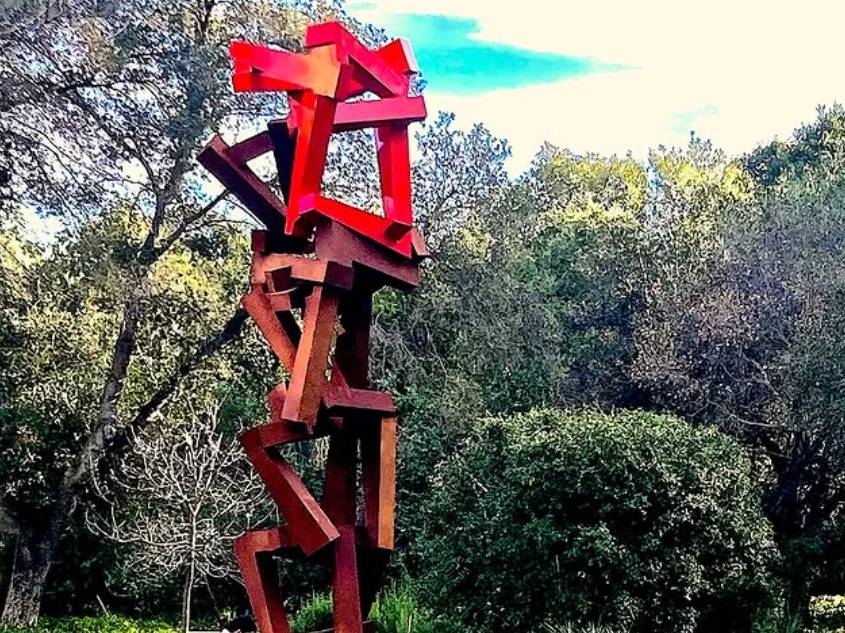
A corten steel sculpture is a three-dimensional artwork fabricated wholly or partially from weathering steel, using the material both for its structural performance and its expressive surface qualities.
Common applications include:
- monumental abstract sculpture
- public art installations
- architectural sculpture
- memorials
- landscape sculpture
- geometric sculptural interventions
- site-specific outdoor artworks
Corten steel allows sculpture to operate not merely as solid volume, but as a dynamic relationship between:
- mass
- void
- line
- geometry
- scale
- environmental interaction
Its architectural presence makes it especially effective in large-scale contemporary projects.
Why Corten Steel Is So Popular in Sculpture
Structural Strength
Corten steel offers excellent mechanical performance.
This allows:
- large-scale fabrication
- self-supporting structures
- technically ambitious public artworks
- long-span sculptural engineering
Its structural reliability makes it ideal for monumental works.
Distinctive Aesthetic Identity
Its naturally weathered surface creates an immediately recognizable visual language.
It communicates:
- permanence
- industrial honesty
- material warmth
- contemporary architectural sophistication
- visual integration with natural landscapes
Its oxidation is not a flaw—it becomes part of the artwork’s identity.
Outdoor Suitability
Corten steel was developed specifically for atmospheric exposure.
It is particularly suitable for:
- parks
- plazas
- sculpture gardens
- urban interventions
- open architectural spaces
Its weathering behavior makes it highly relevant for exterior installations.
Relative Maintenance Efficiency
When properly engineered, corten steel often requires less maintenance than conventional exposed steel systems.
However, this depends entirely on correct environmental specification.
Fabrication Techniques
Producing corten steel sculpture requires advanced technical processes.
Cutting
Common fabrication methods include:
- plasma cutting
- laser cutting
- oxy-fuel cutting
- CNC precision cutting
These allow complex geometries and exact dimensional control.
Welding
Essential for structural assembly.
Depending on project requirements:
- MIG welding
- TIG welding
- structural welding systems
- specialized ferrous assembly methods
Correct welding execution is critical for structural integrity and weathering consistency.
Forming and Bending
Corten steel can be:
- curved
- folded
- rolled
- structurally formed
This significantly expands formal sculptural possibilities.
Structural Engineering
Large-scale projects typically require:
- structural analysis
- anchoring design
- load calculations
- fabrication validation
At Alfa Arte, our expertise in metalworking and technical structures supports the development of technically complex sculptural works integrating engineering and advanced fabrication.
Digital Modeling
Contemporary workflows frequently incorporate:
- CAD design
- 3D modeling
- digital scanning
- fabrication simulation
Our digital modeling and 3D scanning services support precise sculptural development from concept through production.
Surface Finishing and Controlled Weathering
Although corten naturally develops patina, many projects require controlled surface management.
Possible approaches include:
- accelerated oxidation
- stabilization processes
- temporary protective coatings
- sealed finishes depending on environment
Alfa Arte’s patina, painting, and finishes department develops custom finishing strategies for technically demanding metal sculptures.
Applications in Contemporary Art
Corten steel sculpture is widely used in:
- public art
- memorial projects
- abstract sculpture
- landscape interventions
- sculptural architecture
- urban installations
- monumental artistic works
Its aesthetic integrates especially well with:
- stone
- glass
- concrete
- vegetation
- modern architectural environments
This versatility explains its strong presence in contemporary sculpture.
Technical Challenges
Corten steel is not universally appropriate.
Key considerations include:
- marine environments
- poor drainage design
- moisture retention
- improper joint detailing
- incompatible adjacent materials
Incorrect specification can compromise long-term performance.
Material expertise is essential.
Corten Steel vs Other Sculptural Materials
Corten Steel vs Stainless Steel
Stainless steel offers:
- clean reflective surfaces
- excellent corrosion resistance
- technological visual language
Corten offers:
- warmer material expression
- evolving surface character
- stronger natural integration
Each serves different artistic intentions.
Corten Steel vs Bronze
Bronze offers:
- detailed casting potential
- classical sculptural tradition
- refined surface possibilities
Corten excels in:
- structural monumentality
- modular fabrication
- contemporary architectural expression
Final Thoughts: Corten Steel Sculpture
Corten steel sculpture represents one of the most powerful material languages in contemporary sculpture. Its combination of structural strength, evolving visual character, and architectural presence makes it exceptionally valuable for ambitious artistic projects.
From urban interventions to monumental outdoor artworks, corten steel demonstrates how engineering, industrial fabrication, and artistic expression can merge into a unified sculptural language.
At Alfa Arte, we develop complex sculptural projects where artistic vision, advanced engineering, and fabrication expertise come together to create works designed to endure both structurally and culturally.