

Bronze Sculpture Fabrication: Process, Lost Wax Casting, and Finishing
Bronze sculpture fabrication combines centuries-old artistic techniques with contemporary technology to transform an artist’s original concept into a durable metal artwork.
Bronze remains one of the most important materials in sculpture due to its durability, ability to reproduce intricate details, structural properties, and extensive range of surface finishes and patinas. It can be used to create everything from small figurative works to complex contemporary pieces and monumental sculptures several meters high.
However, producing a bronze sculpture involves much more than simply pouring molten metal into a mold. Depending on the artwork, the process can include digital modeling, enlargement, mold making, wax reproduction, lost wax casting, welding, chasing, structural engineering, patination, and final installation.
Since 1993, Alfa Arte has collaborated with artists, architects, and institutions on sculptural projects involving bronze and other metals, combining artistic foundry techniques with digital technologies, engineering, finishing, and large-scale fabrication capabilities.
What Is Bronze Sculpture Fabrication?
Bronze sculpture fabrication is the process of transforming an artistic model into a finished bronze artwork through a combination of modeling, mold making, casting, metalworking, assembly, and finishing techniques.
The starting point can be:
- a clay model;
- a plaster model;
- a maquette;
- an existing sculpture;
- a digital model;
- a 3D file;
- an original artwork in another material.
Depending on the scale and complexity of the project, the original model may need to be digitized, enlarged, divided into sections, or technically adapted before the bronze casting process begins.
Bronze fabrication is therefore part of the broader sculpture fabrication process, where artistic production, technical development, and engineering work together to transform an idea into a finished artwork.
Why Is Bronze Used for Sculpture?
Bronze has been used by sculptors for thousands of years.
Its continued relevance is not simply historical. The material has technical and aesthetic properties that make it particularly suitable for sculpture.
Among its main advantages are:
- excellent durability;
- ability to reproduce fine details;
- suitability for complex geometries;
- good outdoor performance;
- extensive patination possibilities;
- structural resistance;
- repairability;
- long artistic tradition.
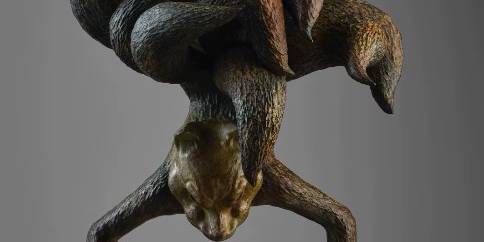
Bronze is particularly effective at reproducing textures and subtle details from an original model.
This makes it suitable for both highly detailed figurative sculpture and complex contemporary artworks.
How Is a Bronze Sculpture Made?
The exact production method depends on the artwork, but professional bronze sculpture fabrication generally involves the following stages:
- Analysis of the original artwork.
- Digitalization or enlargement when required.
- Mold making.
- Wax reproduction.
- Wax finishing and assembly.
- Creation of the refractory shell.
- Wax removal.
- Bronze melting and casting.
- Removal of the ceramic shell.
- Metal finishing and chasing.
- Welding and assembly.
- Surface reconstruction.
- Patination.
- Quality control.
- Transportation and installation.
For large works, these stages can become significantly more complex because the sculpture must often be divided into numerous individual sections.
1. The Original Model
Every bronze sculpture begins with an original model.
Traditionally, artists have worked with materials such as:
- clay;
- wax;
- plaster;
- plasticine;
- wood;
- other modeling materials.
Today, the starting point can also be entirely digital.
Regardless of the medium, the objective is to preserve the artistic characteristics of the original throughout the fabrication process.
Before production begins, factors such as dimensions, geometry, textures, structural requirements, final location, and desired finish must be considered.
Alfa Arte’s artistic consultancy can help assess the technical and production requirements involved in transforming an original concept into a finished bronze artwork.
2. 3D Scanning and Digital Modeling
Digital technologies can play an important role in contemporary bronze sculpture fabrication.
An existing physical model can be captured through 3D scanning and transformed into a digital model.
This makes it possible to:
- preserve the geometry of the original;
- modify dimensions;
- enlarge or reduce the sculpture;
- analyze complex areas;
- prepare different sections;
- develop technical solutions before production.
This process is particularly useful when an artist creates a small maquette that must subsequently be transformed into a much larger bronze sculpture.
Alfa Arte’s digital modeling and 3D scanning capabilities allow physical artworks to be translated into precise digital models for subsequent production.
3. Enlarging a Bronze Sculpture
An original model does not need to have the same dimensions as the final bronze artwork.
A small sculpture can be enlarged into a work several meters high.
The enlargement process may involve:
- 3D scanning;
- digital scaling;
- CNC machining;
- milling;
- traditional enlargement methods;
- manual sculptural adjustments.
Simply multiplying every dimension is not always sufficient.
When a sculpture changes scale dramatically, certain details may need to be reconsidered so that the visual character of the original is maintained.
For particularly ambitious projects, this stage becomes part of the wider large-scale sculpture fabrication process, where enlargement must be coordinated with engineering, sectional production, transportation, and installation.
4. Mold Making for Bronze Sculpture
Once the model has been approved, a mold can be produced.
The mold captures the geometry and surface texture of the original sculpture.
Depending on the characteristics of the artwork, different materials and systems can be used.
These may include:
- silicone;
- plaster;
- resins;
- rigid support structures;
- multi-part molds.
Complex sculptures often require the model to be divided into multiple mold sections.
The objective is to reproduce the original artwork accurately while creating a production system that allows wax replicas to be obtained reliably.
5. Creating the Wax Model
Once the mold is completed, a wax reproduction of the sculpture is produced.
This wax model plays a central role in the lost wax casting process.
The wax must accurately reproduce:
- geometry;
- textures;
- surface details;
- transitions;
- artistic marks.
After removal from the mold, the wax is inspected and corrected manually.
Any seams or imperfections resulting from the mold-making process can be repaired at this stage.
This detailed manual work is important because imperfections in the wax can subsequently be reproduced in bronze.
6. Preparing the Wax for Casting
The wax model must then be prepared so that molten bronze can eventually flow through the casting system.
A network of wax channels is added to the model.
These channels help control:
- metal entry;
- material distribution;
- gas evacuation;
- flow through the mold.
The configuration depends on the geometry and dimensions of the component.
For complex sculptures, each section may require a different casting strategy.
7. Creating the Refractory Shell
The prepared wax model is then surrounded by a refractory material capable of withstanding the temperature of molten bronze.
Depending on the casting system, multiple layers may be applied to create a resistant shell around the wax.
The shell must:
- reproduce the surface accurately;
- withstand heating;
- resist the pressure of molten metal;
- maintain dimensional stability.
This creates the temporary mold into which the bronze will eventually be poured.
8. The Lost Wax Process
The term lost wax casting comes from the next stage.
Once the refractory mold has been created, it is heated.
The wax inside melts and is removed, leaving an empty cavity that reproduces the shape of the original model.
The original wax reproduction is therefore “lost” during the process.
What remains is a heat-resistant negative mold ready to receive molten bronze.
Lost wax casting has been used for centuries because it makes it possible to reproduce highly complex forms and detailed sculptural surfaces.
9. Melting and Pouring the Bronze
Bronze must be heated until it reaches the appropriate molten state for casting.
The exact parameters depend on factors such as:
- alloy;
- dimensions;
- mold characteristics;
- component geometry;
- casting system.
Once ready, the molten bronze is poured into the refractory mold.
The metal flows through the internal cavity and reproduces the shape previously occupied by the wax.
After cooling and solidification, the refractory shell can be removed.
The result is a raw bronze casting that still requires extensive finishing.
Alfa Arte’s artistic foundry combines specialized casting processes with the technical and artistic expertise required for complex sculptural projects.
10. Removing the Casting System
Once the bronze component has cooled, the temporary casting channels must be removed.
The raw casting can contain:
- sprues;
- channels;
- casting marks;
- surface irregularities.
These elements are cut away before the surface is refined.
At this stage, the bronze begins its transformation from an industrial casting into a finished artistic surface.
11. Chasing and Surface Reconstruction
Chasing is one of the most important finishing stages in bronze sculpture fabrication.
Specialists work directly on the metal to restore the surface characteristics of the original model.
This can involve:
- grinding;
- filing;
- sanding;
- polishing;
- texture reconstruction;
- correcting small imperfections.
The objective is to remove evidence of the casting process while preserving the artist’s intended surface.
For highly textured artworks, this stage requires considerable artistic sensitivity.
12. Welding Bronze Sculpture Sections
Large bronze sculptures are rarely cast as a single piece.
Instead, the artwork is divided into numerous sections.
After casting, these components must be assembled through welding.
The process requires careful alignment to ensure that the geometry of the complete sculpture corresponds to the approved model.
After welding, the joints must be reconstructed so that they visually disappear.
This may require:
- grinding welds;
- chasing;
- texture reproduction;
- polishing;
- surface matching.
Once completed correctly, it can become extremely difficult to identify where the original bronze sections were joined.
13. Internal Structures for Large Bronze Sculptures
Large and monumental bronze artworks may require an internal supporting structure.
This structure helps transfer loads and provide stability to the finished artwork.
Depending on the project, engineering analysis may consider:
- total weight;
- center of gravity;
- wind loads;
- connection points;
- structural reinforcement;
- foundations;
- anchoring systems.
Alfa Arte’s metalworking and technical structures capabilities allow these structural elements to be integrated into complex sculptural projects.
When dimensions become particularly significant, these requirements form part of the broader monumental sculpture fabrication process.
14. Bronze Patination
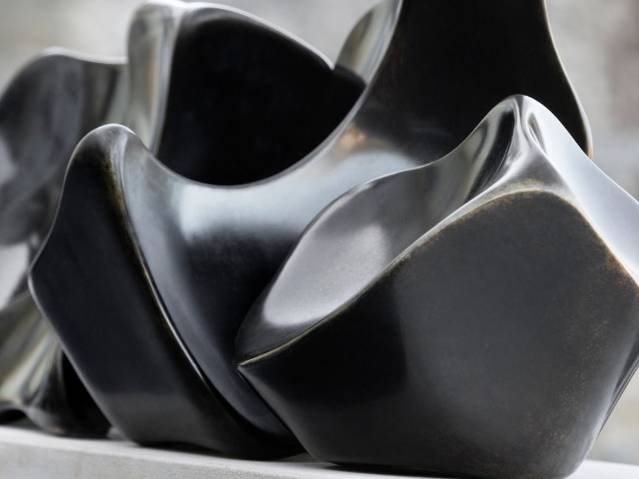
Patination is one of the most distinctive stages of bronze sculpture fabrication.
A patina modifies the appearance of the bronze surface through controlled chemical and finishing processes.
Depending on the desired artistic result, bronze can present a wide range of colors and effects.
These can include:
- brown tones;
- black finishes;
- green tones;
- blue-green effects;
- reddish tones;
- layered finishes;
- variations across the surface.
The final appearance depends on multiple variables, including the bronze alloy, surface preparation, chemicals, temperature, application method, and finishing technique.
Patination therefore combines technical knowledge with artistic judgment.
Alfa Arte’s patina, painting and finishes service allows different surface treatments to be developed according to the artist’s intended result.
15. Protective Finishing
After patination, the bronze may receive a protective finish.
The objective is to help preserve the surface and control how it evolves over time.
The appropriate system depends on:
- indoor or outdoor installation;
- climate;
- exposure;
- intended appearance;
- maintenance requirements.
Outdoor sculptures require particular consideration because bronze surfaces interact continuously with environmental conditions.
Bronze Sculpture Fabrication for Outdoor Spaces
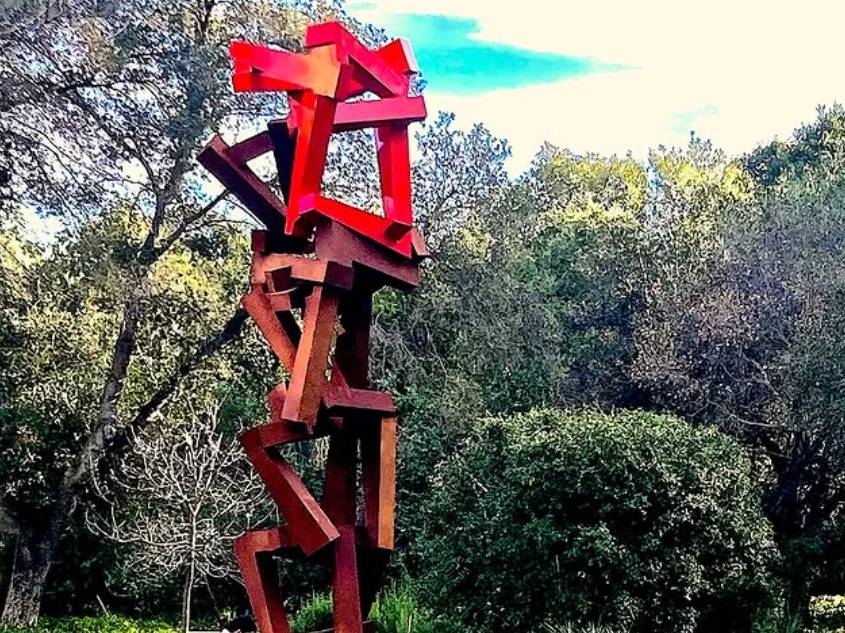
Bronze is widely used for outdoor sculpture due to its durability and ability to develop visually rich surfaces.
However, an outdoor project must consider more than the material itself.
Factors include:
- rain;
- humidity;
- temperature changes;
- pollution;
- marine environments;
- public interaction;
- drainage;
- foundations;
- maintenance.
The patina itself may also evolve naturally over time depending on environmental exposure.
Understanding these variables during fabrication helps ensure that the sculpture behaves as intended after installation.
Large-Scale Bronze Sculpture Fabrication
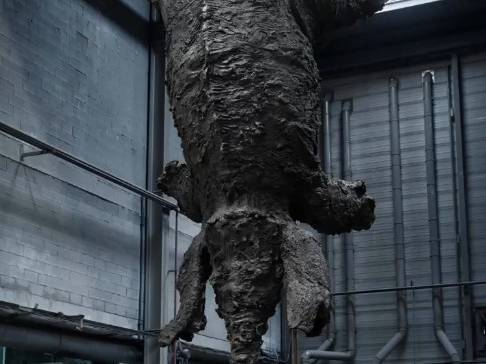
Producing a bronze sculpture several meters high introduces additional technical challenges.
The artwork must usually be divided into multiple sections to accommodate:
- mold making;
- casting dimensions;
- handling;
- welding;
- transportation;
- installation.
An internal supporting structure may also be necessary.
For this reason, large-scale bronze sculpture fabrication requires coordination between artists, model makers, foundry specialists, engineers, welders, finishing specialists, and installation teams.
These projects combine the principles of bronze casting with those involved in large-scale sculpture fabrication.
Monumental Bronze Sculpture Fabrication
Monumental bronze sculptures add another level of complexity.
When a work is intended for a public square, architectural project, museum exterior, park, or other permanent environment, the project may require:
- structural engineering;
- foundation design;
- anchoring systems;
- sectional production;
- specialized transportation;
- crane installation;
- coordination with construction teams.
The fabrication strategy must therefore consider the entire lifecycle of the artwork, from the original model to its final installation.
Bronze Sculpture Fabrication for Artists
For artists, working with a specialized bronze foundry makes it possible to translate models created in other materials into permanent metal artworks.
The collaboration may begin with:
- a maquette;
- clay sculpture;
- plaster;
- wax;
- digital model;
- existing artwork.
Throughout the process, technical decisions should support rather than redefine the artistic intention.
Communication between the artist and fabrication team is particularly important during:
- enlargement;
- mold making;
- surface reconstruction;
- assembly;
- patination.
The final objective is to preserve the artistic character of the original while resolving the technical challenges required to produce it in bronze.
Bronze Sculpture Fabrication for Architects and Public Projects
Bronze sculptures can also form part of architectural and public-space projects.
In these cases, fabrication must often be coordinated with:
- architects;
- engineers;
- contractors;
- landscape designers;
- public institutions;
- installation teams.
Considerations such as foundations, access, installation schedules, public interaction, and long-term maintenance can influence technical decisions from the beginning.
Early collaboration can help integrate the sculpture into the wider architectural or urban project.
Transportation and Installation of Bronze Sculptures
Once fabrication and finishing are complete, the artwork must reach its final location safely.
Depending on the dimensions and destination, transportation may require:
- custom packaging;
- protective structures;
- specialized vehicles;
- international shipping;
- oversized transport;
- cranes;
- lifting equipment.
Large sculptures may be transported in several sections and assembled at the final location.
Alfa Arte’s logistics, installation and transport capabilities allow fabrication to be coordinated with the requirements of shipping and final installation.
Why Work With a Specialized Bronze Sculpture Fabricator?
Bronze sculpture fabrication involves numerous highly specialized disciplines.
A complete project can require:
- artistic consultancy;
- 3D scanning;
- enlargement;
- model making;
- mold making;
- wax work;
- lost wax casting;
- welding;
- chasing;
- engineering;
- patination;
- logistics;
- installation.
Coordinating these stages within a specialized sculpture fabrication environment helps maintain consistency throughout the project and reduces technical risks between different phases.
Bronze Sculpture Fabrication at Alfa Arte
Since 1993, Alfa Arte has worked with artists, architects, institutions, and international clients on the production of sculptural artworks.
Bronze fabrication can combine traditional foundry craftsmanship with contemporary technologies such as digital modeling, 3D scanning, engineering, and advanced production methods.
This allows projects to be developed at different scales, from complex individual components to large and monumental artworks.
Each sculpture requires a specific approach depending on its geometry, dimensions, artistic characteristics, final location, and desired surface finish.
The objective throughout the process is to provide the technical expertise necessary to transform the artist’s original concept into a finished bronze artwork while preserving its artistic integrity.
Frequently Asked Questions About Bronze Sculpture Fabrication
How is a bronze sculpture fabricated?
Bronze sculptures can be produced through lost wax casting. The process generally involves creating a model and mold, producing a wax reproduction, creating a refractory shell, removing the wax, pouring molten bronze, and subsequently finishing, welding, chasing, and patinating the metal.
What is lost wax casting?
Lost wax casting is a process in which a wax reproduction of an artwork is surrounded by a refractory material. The wax is removed through heating, leaving a cavity into which molten bronze can be poured.
Can a small model be transformed into a monumental bronze sculpture?
Yes. A small model can be digitized using 3D scanning and enlarged digitally. The final model can then be divided into sections suitable for mold making, casting, assembly, and transportation.
Are large bronze sculptures cast in one piece?
Usually not. Large bronze sculptures are typically divided into multiple components. These are cast individually and subsequently welded together, with the joints reconstructed to create a continuous surface.
Can bronze sculptures be installed outdoors?
Yes. Bronze is widely used for permanent outdoor sculpture. However, the alloy, structure, patination, protective treatment, anchoring system, environmental conditions, and maintenance requirements should all be considered during the project.
Conclusion
Bronze sculpture fabrication combines one of the oldest artistic metalworking traditions with contemporary technologies, engineering, and large-scale production methods.
From the original model and mold making to lost wax casting, welding, chasing, patination, transportation, and installation, each stage contributes directly to the quality and character of the finished artwork.
For large and monumental projects, the process becomes even more complex, requiring close coordination between artistic and technical specialists.
At Alfa Arte, we collaborate with artists, architects, and institutions to develop bronze sculptural projects at different scales, providing the technical processes necessary to transform an artistic concept into a finished physical artwork.