

Religious Sculpture: History, Symbolism, and the Evolution of Sacred Art
Religious sculpture is one of the oldest and most enduring forms of artistic expression in human history. Long before art was understood as a purely aesthetic pursuit, sculpture served spiritual, ritual, symbolic, and educational purposes. Across civilizations, artists have shaped stone, wood, bronze, and other materials to represent deities, sacred figures, theological narratives, and concepts of transcendence.
Unlike two-dimensional artistic disciplines, sculpture possesses a direct physical relationship with space and the viewer. Its three-dimensional presence creates an immediate connection between object, environment, and human perception. In religious contexts, this relationship becomes even more profound, as the artwork often functions not merely as something to be observed, but as an active part of devotion, ritual practice, or spiritual contemplation.
From ancient temples and medieval cathedrals to contemporary memorials and sacred public installations, religious sculpture continues to occupy a unique place where craftsmanship, symbolism, and belief intersect.
What Is Religious Sculpture?
Religious sculpture refers to three-dimensional artworks created to represent sacred themes, spiritual figures, or symbolic concepts associated with a religious tradition.
Its purposes may include:
- Devotional use, serving as an object of prayer or contemplation
- Didactic communication, visually transmitting religious teachings
- Commemorative function, honoring saints, spiritual leaders, or historical events
- Architectural integration, forming part of temples, churches, monuments, or sacred spaces
- Symbolic expression, representing abstract theological or spiritual ideas
Although religious sculpture is often associated with Christianity in Western art history, sculptural representations of sacred themes appear across many cultures and traditions, including Hinduism, Buddhism, ancient Egyptian religion, Greco-Roman mythology, and pre-Columbian spiritual systems.
The Historical Origins of Religious Sculpture
Ancient Civilizations
Religious sculpture emerged thousands of years ago as one of humanity’s earliest symbolic art forms.
In Ancient Egypt, monumental sculptures of gods and pharaohs served as manifestations of divine authority and eternal presence. These works were carefully designed according to symbolic proportions and ritual functions.
In Mesopotamia, votive sculptures represented perpetual worship, symbolically maintaining a believer’s presence before the deity.
In India, sacred sculpture developed extraordinary complexity, producing highly sophisticated depictions of Hindu deities, Buddhist figures, and symbolic spiritual narratives integrated into temple architecture.
Across civilizations, sculpture became a way to make the invisible visible.
Religious Sculpture in Christian Art
Within Christianity, sculpture became one of the most influential artistic vehicles for communicating faith.
Romanesque Sculpture
During the medieval period, sculpture played a powerful educational role.
Church portals, capitals, and façades depicted:
- The Last Judgment
- Biblical narratives
- Saints and martyrs
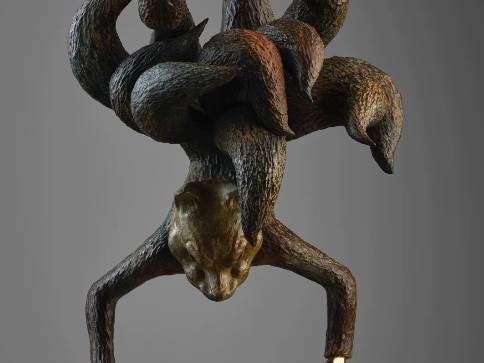
- Symbolic animals
- Allegories of sin, salvation, heaven, and damnation
In a largely illiterate society, sculpture functioned as a visual theological language.
Gothic Sculpture
The Gothic period introduced greater realism and emotional sensitivity.
Religious figures became:
- More anatomically natural
- More expressive
- More dynamic in posture
- More emotionally relatable
This transformation brought sacred art closer to human experience while maintaining spiritual symbolism.
Renaissance and Baroque Sacred Sculpture
The Renaissance reintroduced classical proportion, anatomical study, and humanist realism into religious sculpture.
Sacred figures were represented with:
- Idealized anatomy
- Balanced compositions
- Greater technical precision
- A renewed emphasis on human dignity
The Baroque period pushed sacred sculpture toward emotional intensity.
Baroque religious sculpture embraced:
- Dramatic movement
- Expressive gestures
- Theatrical compositions
- Realistic surface treatments
- Polychromy and dramatic lighting effects
In countries such as Spain and Italy, sacred sculpture became deeply immersive, designed to provoke emotional and spiritual response.
Materials Used in Religious Sculpture
Material selection in religious sculpture is never purely technical. It also carries symbolic, practical, and contextual meaning.
Wood
A traditional material in devotional sculpture, particularly in Southern European religious art.
Advantages include:
- Ease of carving
- Relative lightness
- Excellent compatibility with polychrome finishes
- Suitability for processional sculptures
Stone and Marble
Commonly used for:
- Cathedrals
- Architectural sculpture
- Tomb monuments
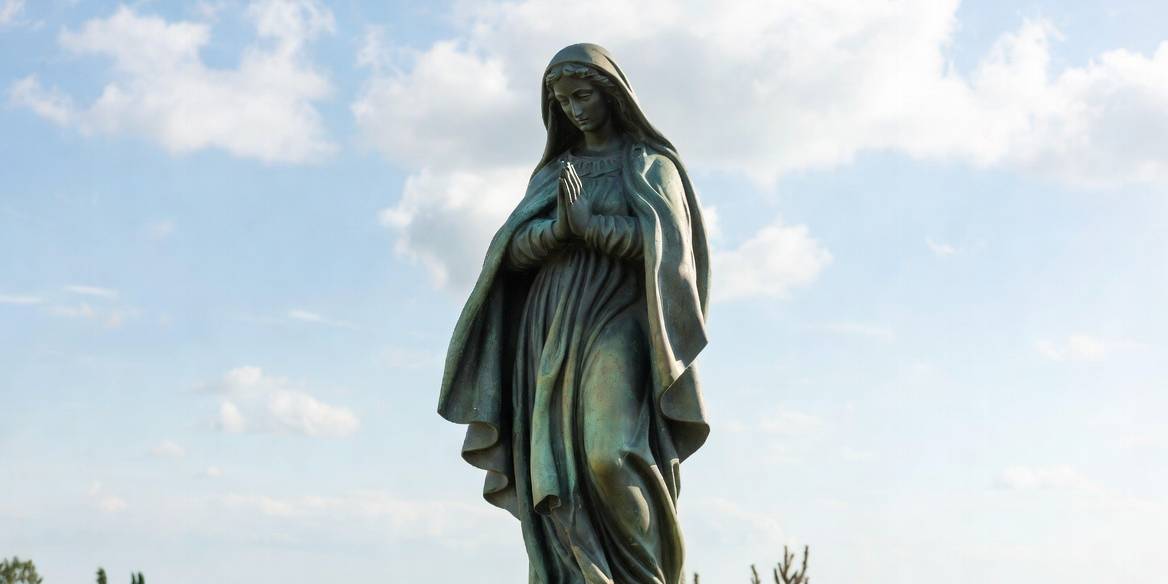
- Sacred memorials
They communicate:
- Permanence
- Monumentality
- Sacred authority
Bronze
Bronze has long been associated with prestige, durability, and monumentality.
It is frequently used for:
- Religious monuments
- Church doors
- Public commemorative sculpture
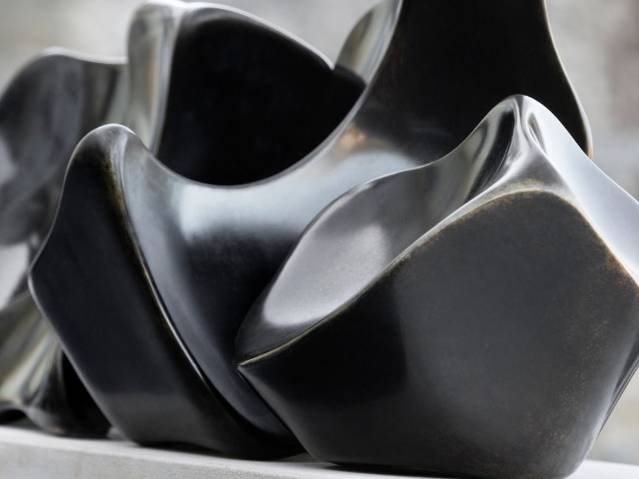
- Contemporary sacred installations
At Alfa Arte, we specialize in artistic foundry services for bronze, aluminum, and stainless steel sculptures, supporting complex artistic and monumental projects.
Contemporary Materials
Modern sacred sculpture may also incorporate:
- Stainless steel
- Aluminum
- Resin
- Concrete
- Glass
- Mixed media
These materials allow contemporary artists to reinterpret sacred symbolism in new ways.
Sculptural Techniques in Sacred Art
Carving
Traditional subtractive technique used in:
- Wood
- Stone
- Marble
Requires precision, planning, and deep material knowledge.
Modeling
Used for creating forms in:
- Clay
- Wax
- Plasticine
Ideal for expressive original compositions and prototype development.
Casting
Essential for metal sculpture production.
Lost-wax casting remains one of the most precise methods for preserving sculptural detail.
Our expertise in traditional mold making and artisanal techniques supports faithful sculptural reproduction with exceptional technical accuracy.
Surface Finishing
Finishes play a critical role in sacred sculpture.
This includes:
- Patination
- Painting
- Gilding
- Protective treatments
- Historical surface recreation
Alfa Arte’s patina, painting, and finishes department develops custom finishes for both historical-inspired and contemporary sculptural works.
Religious Sculpture in Contemporary Practice
Religious sculpture is not confined to historical traditions.
Contemporary artists continue to reinterpret spiritual themes through:
- Abstraction
- Minimalism
- Symbolic reduction
- Conceptual sculpture
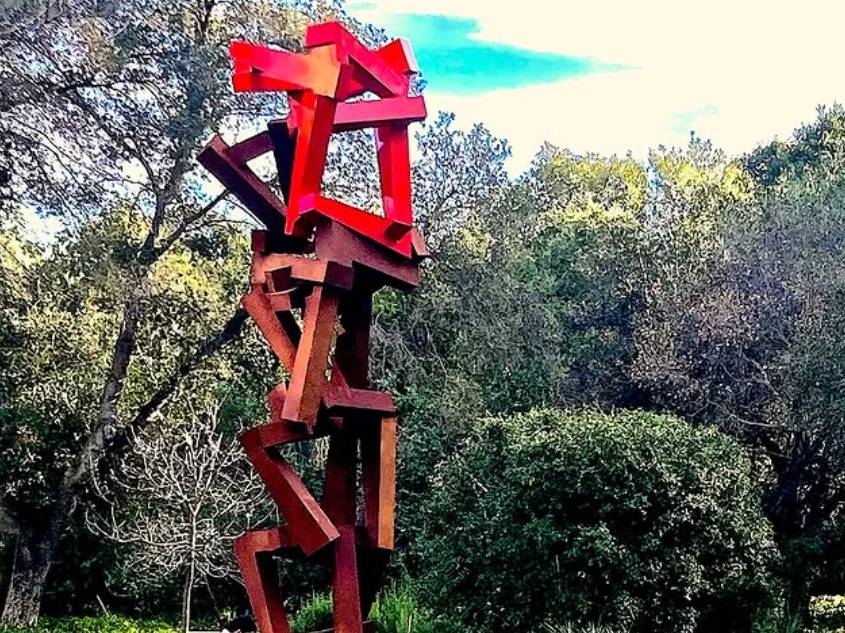
- Site-specific sacred installations
Modern commissions may include:
- Contemporary churches
- Memorial spaces
- Spiritual gardens
- Public monuments
- Interfaith cultural spaces
Sacred sculpture continues to evolve while maintaining its symbolic core.
Space, Context, and Installation
The meaning and impact of religious sculpture are inseparable from context.
A sculpture intended for:
- A cathedral interior
- A public square
- A contemplative garden
- A pilgrimage site
- A memorial landscape
…will require entirely different structural, material, and aesthetic solutions.
Scale, environmental exposure, anchoring systems, transport logistics, and audience interaction all influence design decisions.
Final Thoughts: Religious Sculpture
Religious sculpture remains one of the most profound intersections between artistic craftsmanship, material expression, and spiritual meaning. Across centuries and cultures, it has shaped sacred spaces, preserved collective memory, and translated belief into physical form.
From medieval carved altarpieces to contemporary monumental installations, sacred sculpture continues to evolve without losing its emotional and symbolic power.
At Alfa Arte, we collaborate with artists, institutions, and cultural projects to bring complex sculptural visions to life—combining traditional craftsmanship, advanced fabrication, and technical precision in works designed to endure both materially and culturally.