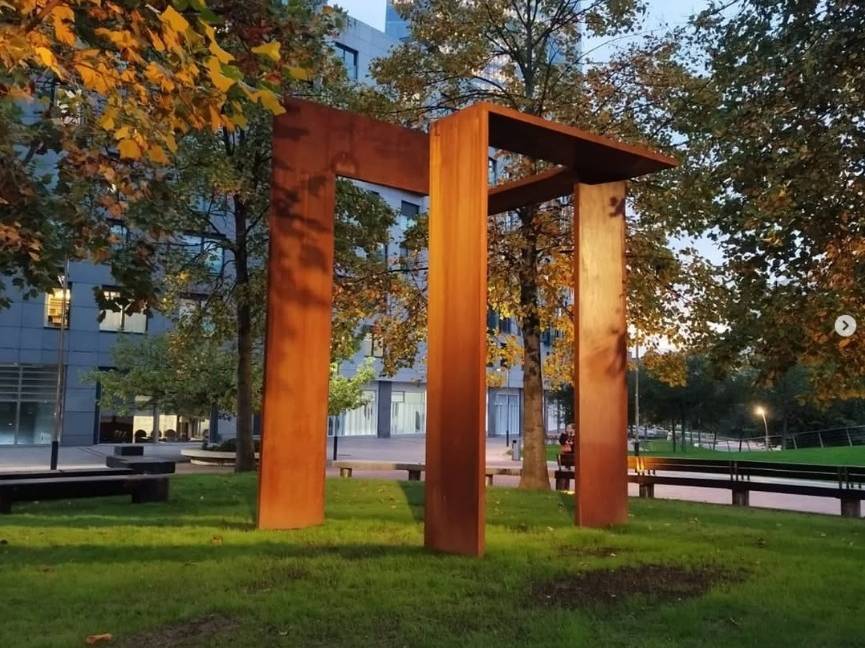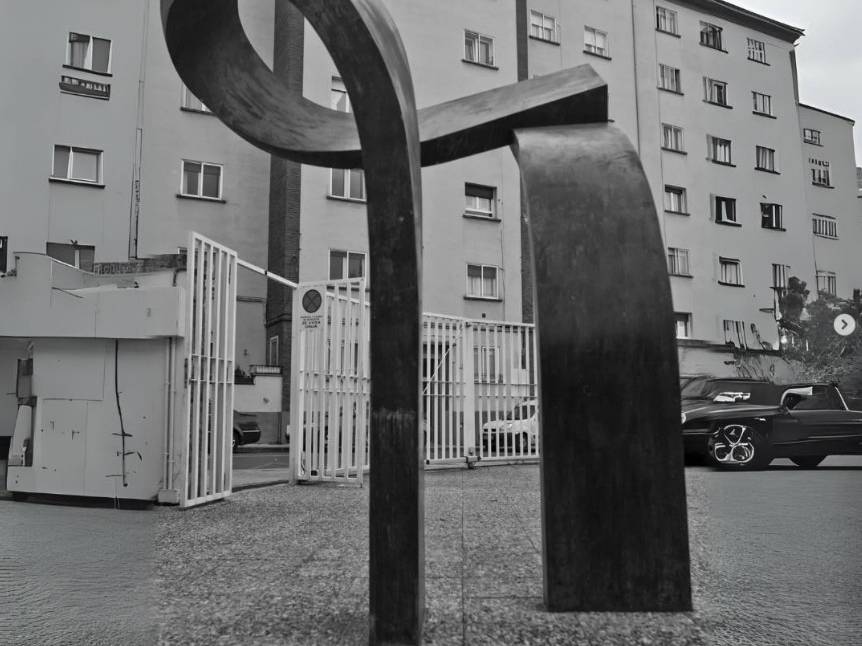


Sculpture Enlargement: Methods, 3D Scanning, Scaling, and Fabrication
Sculpture enlargement is the process of transforming a small model, maquette, or original artwork into a larger version while preserving its proportions, surface details, artistic character, and visual balance.
This process is fundamental in the production of large-scale and monumental sculpture. Artists frequently create an initial work at a manageable size before producing the final sculpture at several times the original dimensions.
Enlargement can be carried out using traditional techniques, digital technologies, or a combination of both.
Modern workflows may include 3D scanning, digital modeling, CNC machining, robotic milling, foam enlargement, clay modeling, and manual finishing.
Since 1993, Alfa Arte has collaborated with artists, architects, designers, and institutions to transform artistic models into sculptures at different scales, integrating enlargement with digital development, engineering, fabrication, foundry, finishing, logistics, and installation.
What Is Sculpture Enlargement?
Sculpture enlargement is the process of increasing the dimensions of an existing artistic model while maintaining the geometry and artistic intention of the original.
The starting point may be:
- a small clay model;
- a plaster model;
- a wax sculpture;
- a resin model;
- a foam model;
- a finished sculpture;
- a digital file;
- a 3D scan.
The objective is not simply to multiply dimensions mathematically.
When a sculpture increases in size, its visual perception changes.
Elements that appear correct in a small maquette may need subtle adjustments when enlarged to several meters.
For this reason, sculpture enlargement combines:
- dimensional accuracy;
- artistic interpretation;
- digital technology;
- manual craftsmanship;
- technical planning.
Why Are Sculptures Enlarged?
Artists frequently develop an idea at a small or medium scale before committing to a large final piece.
This approach offers several advantages.
A smaller model is easier to:
- create;
- modify;
- transport;
- evaluate;
- present to clients or institutions;
- reproduce digitally.
Once the artistic concept has been approved, the model can be enlarged to the final dimensions required for fabrication.
Sculpture enlargement is particularly common in:
- large-scale sculpture fabrication;
- monumental sculpture fabrication;
- public art fabrication;
- architectural sculpture;
- outdoor sculpture projects.
How Is a Sculpture Enlarged?
The exact process depends on the original model, final dimensions, geometry, material, and required level of precision.
A typical enlargement workflow may include:
- Analysis of the original artwork.
- Definition of final dimensions.
- 3D scanning or digital modeling.
- Digital scaling.
- Geometric corrections.
- Structural planning.
- Division into sections.
- CNC or robotic machining.
- Creation of a full-scale model.
- Manual sculptural refinement.
- Mold making or direct fabrication.
- Final sculpture production.
Each stage affects the accuracy and artistic quality of the finished artwork.
1. Analyzing the Original Sculpture
The process begins by studying the original model.
Important characteristics include:
- dimensions;
- geometry;
- surface texture;
- proportions;
- symmetry or asymmetry;
- delicate details;
- undercuts;
- artistic marks.
The enlargement method should be selected according to the characteristics of the original.
A smooth geometric sculpture may require a different workflow from a highly textured figurative clay model.
2. Defining the Final Scale
Before enlargement begins, the final dimensions must be clearly established.
The sculpture may be enlarged:
- proportionally;
- to a specific height;
- to fit a particular site;
- according to architectural dimensions;
- according to engineering constraints.
For example, a 50-centimeter maquette may be enlarged to:
- 2 meters;
- 5 meters;
- 10 meters;
- or considerably more.
The scaling factor affects not only the external geometry but also the manufacturing strategy, internal structure, transportation, and installation.
3. Traditional Sculpture Enlargement
Before digital technologies became widely available, sculptors relied on manual enlargement systems.
Traditional methods can include:
- pointing machines;
- grids;
- proportional measurement systems;
- pantographs;
- manual reference points.
These techniques allow measurements from the original sculpture to be transferred to a larger model.
They can remain useful for certain artistic workflows, especially when manual interpretation forms an important part of the enlargement process.
4. Digital Sculpture Enlargement
Digital technologies have transformed sculpture enlargement.
A physical model can be scanned and converted into an accurate three-dimensional digital representation.
This digital model can then be scaled to almost any desired dimension.
The workflow can include:
- 3D scanning;
- mesh processing;
- digital cleanup;
- proportional scaling;
- geometric adjustment;
- sectioning;
- CNC machining;
- robotic milling.
Alfa Arte’s digital modeling and 3D scanning capabilities allow original artworks to be digitized and prepared for enlargement and fabrication.
5. 3D Scanning a Sculpture
3D scanning captures the geometry of an existing physical artwork.
Depending on the sculpture, scanning technologies can record:
- overall volume;
- fine details;
- textures;
- complex curves;
- asymmetrical surfaces.
The scanner generates digital information that can subsequently be converted into a 3D mesh.
This creates a digital replica of the original artwork.
The quality of the scan is especially important when the model contains delicate sculptural details.
6. Cleaning the Digital Model
Raw scan data often requires processing before it can be enlarged.
The digital model may need:
- noise reduction;
- surface repair;
- hole filling;
- mesh optimization;
- removal of scanning artifacts;
- reconstruction of inaccessible areas.
The objective is to create a clean and accurate model without eliminating the artistic characteristics of the original surface.
This stage requires both technical and artistic judgment.
7. Scaling the Sculpture Digitally
Once the model has been prepared, it can be enlarged digitally.
In principle, scaling may appear straightforward: every dimension is multiplied by the same factor.
However, large-scale sculpture often requires additional evaluation.
Features such as:
- facial details;
- fingers;
- thin edges;
- surface textures;
- small cavities;
may behave differently when enlarged.
The digital model therefore becomes a tool not only for scaling but also for assessing how the sculpture will work at its final dimensions.
8. Artistic Adjustments During Enlargement
A mathematically exact enlargement is not always the same as an artistically successful enlargement.
As the scale increases, the viewer’s relationship with the sculpture changes.
A work that was originally viewed from a few centimeters away may eventually be experienced from several meters.
The artist may decide to adjust:
- proportions;
- depth of textures;
- facial features;
- thickness of elements;
- transitions between surfaces.
These modifications can help preserve the visual effect of the original artwork at a much larger scale.
9. Dividing the Digital Model Into Sections
Very large models usually cannot be machined or produced as a single piece.
The digital sculpture is therefore divided into sections.
The division may depend on:
- CNC machine capacity;
- available material dimensions;
- workshop access;
- handling;
- future mold making;
- structural requirements.
The position of each joint should be selected carefully.
Whenever possible, divisions are placed in areas that simplify:
- machining;
- assembly;
- sculptural reconstruction;
- mold production.
10. CNC Sculpture Enlargement
CNC machining is widely used to produce enlarged sculpture models.
A digitally enlarged model can be translated into machining paths that remove material from a large block.
Common materials for enlargement include:
- polyurethane foam;
- expanded polystyrene;
- other machinable modeling materials.
CNC machines can rapidly create the main geometry of large sculptures.
The resulting model is generally close to the final form but may still require extensive manual refinement.
11. Robotic Milling
Industrial robotic systems can also be used for large-scale sculpture enlargement.
Robotic milling offers advantages for:
- complex geometries;
- large volumes;
- multi-axis machining;
- oversized models.
A robotic arm can machine different areas of the sculpture according to the digital model.
This approach combines digital precision with the ability to produce very large forms.
12. Foam Enlargement
Foam is commonly used to create full-scale models.
Its advantages include:
- low weight;
- ease of machining;
- ease of cutting;
- fast production;
- suitability for large dimensions.
Individual foam blocks or sections can be machined separately and later assembled.
The enlarged foam model then serves as the basis for further sculptural work.
13. Manual Finishing of the Enlarged Model
Digital machining does not necessarily replace the sculptor’s hand.
After CNC or robotic enlargement, the model can be manually refined.
This may involve adding or removing material using:
- clay;
- plaster;
- resins;
- modeling compounds;
- hand tools.
The artist can correct details and reintroduce surface characteristics that may not have been perfectly reproduced during machining.
This combination of digital enlargement and traditional craftsmanship can provide both precision and artistic control.
14. Enlarging Figurative Sculpture
Figurative sculpture requires particular care during enlargement.
Important details may include:
- facial expressions;
- anatomy;
- hands;
- clothing;
- hair;
- skin texture.
Small inaccuracies can become much more visible after enlargement.
For this reason, figurative sculpture often involves significant manual refinement after the initial digital scaling and machining stages.
15. Enlarging Abstract Sculpture
Abstract sculpture can present different technical challenges.
The geometry may contain:
- precise curves;
- thin elements;
- complex transitions;
- repeated forms;
- highly controlled surfaces.
Digital modeling can be particularly useful because it allows the fabricator to verify geometric continuity before producing the enlarged model.
16. Enlarging Geometric Sculpture
Geometric artworks often require extremely precise dimensions.
Small errors can affect:
- symmetry;
- alignment;
- angles;
- surface continuity;
- assembly.
For this reason, digital enlargement and CNC production can provide significant advantages.
The model can be checked digitally before physical production begins.
17. Sculpture Enlargement and Engineering
As the sculpture increases in size, structural requirements also change.
A small maquette may not need any internal structure.
The final artwork may require:
- steel frameworks;
- internal reinforcement;
- engineered connections;
- foundations;
- anchoring systems.
For this reason, enlargement should be coordinated with sculpture engineering.
The digital model can become the shared geometric reference used by artists, engineers, and fabricators.
18. Enlargement for Bronze Sculpture Fabrication
Large bronze sculptures often begin with a smaller model.
After enlargement, the full-scale model can be used to create molds.
The subsequent production process may involve:
- mold making;
- wax reproduction;
- lost wax casting;
- bronze casting;
- welding;
- chasing;
- patination.
Our article on bronze sculpture fabrication explains these subsequent production stages in greater detail.
Alfa Arte’s artistic foundry allows enlargement to be integrated with the complete foundry process.
19. Enlargement for Direct Metal Fabrication
Not every enlarged sculpture needs to be cast.
For certain artworks, the digital model can be used directly to plan fabrication in:
- steel;
- stainless steel;
- aluminum.
The model may be converted into:
- sections;
- templates;
- structural references;
- cutting geometry;
- forming information.
The enlarged geometry therefore becomes a production reference for direct metal fabrication.
Alfa Arte’s metalworking and technical structures capabilities enable digital information to be translated into large metal sculptural forms.
20. Sculpture Enlargement for Large-Scale Artworks
Enlargement is a central stage in many large-scale sculpture fabrication projects.
The process allows artists to develop their ideas at a comfortable scale before translating them into works several meters high.
At large dimensions, enlargement must coordinate:
- artistic geometry;
- engineering;
- model production;
- mold making;
- fabrication;
- transport;
- installation.
This integrated approach reduces the risk of discovering production limitations after the full-scale model has already been created.
21. Enlargement for Monumental Sculpture
Monumental sculpture may involve dramatic increases in scale.
A small maquette can become an artwork measuring many meters in height or width.
At this level, enlargement is not simply an artistic process.
It must be coordinated with:
- structural design;
- sectional fabrication;
- lifting systems;
- transport dimensions;
- foundations;
- installation.
This makes enlargement an important component of monumental sculpture fabrication.
22. Sculpture Enlargement for Public Art
Public art commissions often begin with models used during competitions, presentations, or approval processes.
Once a project is selected, the model may need to be enlarged significantly for production.
The final sculpture must also respond to:
- site conditions;
- public safety;
- structural requirements;
- environmental exposure;
- long-term durability.
For this reason, enlargement frequently forms an early stage of public art fabrication.
23. Sculpture Enlargement for Outdoor Artworks
Outdoor sculpture enlargement also needs to anticipate environmental requirements.
The full-scale artwork may eventually need:
- drainage;
- internal reinforcement;
- corrosion protection;
- stronger connections;
- permanent anchoring.
These factors should ideally be considered before the enlarged model is finalized.
This helps connect enlargement with the wider process of outdoor sculpture fabrication.
24. From Enlarged Model to Mold Making
Once the enlarged model has been completed and approved, it can be used to create production molds.
The mold-making strategy depends on:
- geometry;
- surface;
- dimensions;
- undercuts;
- fabrication material.
Large sculptures may require many individual mold sections.
These molds can subsequently be used to reproduce the sculpture in wax, resin, plaster, or other materials depending on the final production process.
25. Quality Control During Enlargement
Quality control is important throughout the enlargement process.
Checks can include:
- dimensional comparison;
- digital-to-physical verification;
- symmetry checks;
- surface inspection;
- proportional analysis.
The enlarged model should be compared with the original artwork before moving into mold making or final fabrication.
This allows corrections to be made while they are still relatively simple.
Why Use Digital Sculpture Enlargement?
Digital workflows offer several important advantages.
They can provide:
- high geometric accuracy;
- repeatable scaling;
- easier dimensional changes;
- precise sectional planning;
- integration with engineering;
- compatibility with CNC and robotic systems;
- digital archiving.
A scanned model can also be preserved digitally for future reproductions or different scales.
However, technology should support the artistic process rather than automatically replace manual judgment.
Traditional vs Digital Sculpture Enlargement
Both approaches can be useful.
Traditional enlargement offers:
- direct manual interpretation;
- strong sculptural control;
- compatibility with traditional studio methods.
Digital enlargement offers:
- precision;
- speed;
- repeatability;
- integration with fabrication;
- easier handling of complex geometry.
Many contemporary sculpture projects use a hybrid workflow combining digital technology with manual sculptural finishing.
Sculpture Enlargement for Artists
For artists, enlargement makes it possible to work initially at a manageable scale and later produce works at architectural or monumental dimensions.
A specialized fabrication team can support the artist through:
- 3D scanning;
- scaling;
- digital correction;
- model production;
- manual refinement;
- engineering coordination;
- fabrication.
The objective is to preserve the distinctive characteristics of the original artwork throughout the enlargement process.
Why Work With a Specialized Sculpture Enlargement Company?
Large-scale enlargement involves more than simply producing a bigger copy.
A specialized team must understand how enlargement affects:
- proportions;
- surface details;
- model construction;
- structural requirements;
- mold making;
- fabrication;
- transportation.
When enlargement is integrated with the subsequent production process, technical decisions can be made with the final artwork in mind.
This can simplify the transition from maquette to full-scale sculpture.
Sculpture Enlargement at Alfa Arte
Since 1993, Alfa Arte has collaborated with artists, architects, designers, and institutions to materialize sculptural projects at different scales.
Depending on the project, the enlargement process can combine:
- artistic consultancy;
- digital modeling and 3D scanning;
- digital scaling;
- CNC and robotic production;
- manual modeling;
- engineering;
- mold making;
- foundry;
- metal fabrication;
- finishing;
- installation.
Each sculpture requires a different enlargement strategy according to its geometry, original model, final scale, material, and production process.
The objective is to transform the original artwork into a larger model while maintaining its proportions, artistic character, and technical viability.
Frequently Asked Questions About Sculpture Enlargement
What is sculpture enlargement?
Sculpture enlargement is the process of increasing the dimensions of a physical or digital artwork while preserving the proportions, geometry, and artistic characteristics of the original.
Can a small sculpture be enlarged using 3D scanning?
Yes. A physical sculpture can be 3D scanned, converted into a digital model, scaled to the required dimensions, and subsequently produced using CNC, robotic machining, or other fabrication methods.
What materials are used to create enlarged sculpture models?
Foam, clay, plaster, resins, and other modeling materials can be used depending on the project and subsequent production process.
Does an enlarged sculpture always remain exactly proportional to the original?
It can be enlarged mathematically in exact proportion, but artists may choose to make subtle adjustments to preserve the visual effect of the original at a much larger scale.
What happens after a sculpture has been enlarged?
The enlarged model can be manually refined and then used for mold making, casting, direct metal fabrication, engineering, or other production processes required for the final artwork.
Conclusion
Sculpture enlargement connects the artist’s original model with the production of large-scale and monumental artworks.
Traditional techniques remain valuable, but technologies such as 3D scanning, digital modeling, CNC machining, and robotic milling make it possible to enlarge highly complex forms with considerable precision.
The most effective process combines technical accuracy with artistic judgment, ensuring that the enlarged sculpture maintains the proportions, surface character, and visual impact of the original.
At Alfa Arte, sculpture enlargement can be integrated with engineering, mold making, foundry, metal fabrication, finishing, logistics, and installation to transform small artistic models into full-scale physical works.