


International Sculpture: iconic works shaping global public space
From its workshop in Europe, Alfa Arte has become part of the international dialogue surrounding contemporary sculpture. Today, international sculpture is defined by scale, mobility and collaboration across borders, bringing together artists, institutions and specialised production partners.
Rather than belonging to a single geography, international sculpture operates within a global network where ideas, materials and fabrication processes circulate between continents. Public space, museums and architectural environments have become the primary stages for this evolving sculptural language.
Ranking: iconic works of international sculpture
1. David – Michelangelo (Florence, Italy)
A foundational reference for all Western sculpture and a benchmark of artistic mastery.
2. The Thinker – Auguste Rodin (Paris, multiple international casts)
One of the first sculptures to circulate globally, establishing sculpture as an international medium.
3. Maman – Louise Bourgeois (installed worldwide)
A contemporary icon whose repeated installations across continents define global public sculpture.
4. Cloud Gate – Anish Kapoor (Chicago, global influence)
A work that reshaped how sculpture interacts with city, reflection and audience on an international scale.
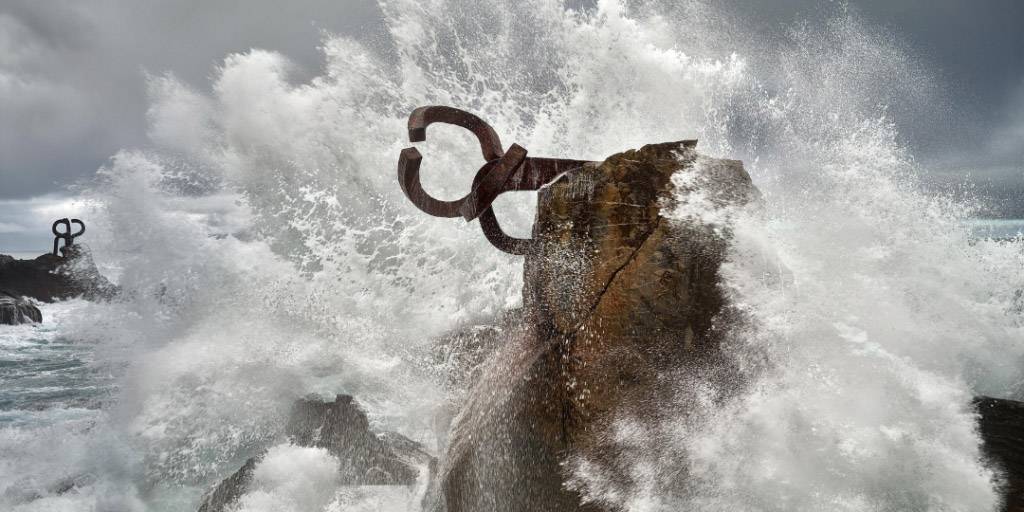
5. Peine del Viento – Eduardo Chillida (San Sebastián)
A landmark of site-specific sculpture whose influence extends far beyond Europe.
These works form the conceptual backbone of what we understand today as international sculpture.
Europe: heritage and contemporary public sculpture
Europe remains a central reference point due to its uninterrupted sculptural tradition and strong commitment to public art. Across Spain, France, Germany and the UK, sculpture is integrated into urban planning and cultural policy.
In Southern Europe, cities such as San Sebastián and Bilbao stand out as international benchmarks. In these contexts, Alfa Arte has contributed to the production of sculptures by artists including Cristina Iglesias, June Crespo, Miquel Barceló and Daniel Canogar, supporting works installed in public space and institutional environments.
Many of these projects require close collaboration between artists and workshops specialised in artistic foundry processes for bronze, stainless steel and aluminium sculpture, where material knowledge and structural precision are essential.
North America: scale and visibility
In North America, international sculpture is often defined by monumentality and urban impact. Cities commission large-scale works as part of regeneration strategies, using sculpture to create landmarks and cultural identity.
These projects frequently involve international production teams, long-distance logistics and materials chosen for durability and performance, reinforcing the global nature of contemporary sculpture.
Asia and the Middle East: new global centres
Asia and the Middle East have emerged as major hubs for international sculpture. Cultural districts and museums commission ambitious works from global artists, often fabricated in collaboration with European workshops and installed in extreme climatic conditions.
This has accelerated the need for experienced production partners capable of working across borders and disciplines.
Latin America and global circulation
Many Latin American artists operate within the international sculpture circuit, producing works fabricated abroad and installed worldwide. Artists such as Leandro Erlich and David Zink Yi exemplify this circulation, where concept, production and final location belong to different cultural contexts.
Collaboration as the foundation of international sculpture
Across all regions, one element remains constant: international sculpture is collaborative by nature. Artists, architects, engineers and specialised workshops work together from early concept to final installation.
This collaborative model explains why sculpture today is both technically advanced and globally mobile, capable of responding to diverse cultural and spatial conditions.
Conclusion: International sculpture
International sculpture represents the convergence of artistic vision, technical expertise and global collaboration. From Europe to the Americas, Asia and beyond, sculpture has become a shared international language shaping public space and cultural identity.
Behind many of these works are specialised workshops such as Alfa Arte, whose role is fundamental in transforming ideas into durable, precise and internationally viable sculptures. Through this collaboration between art and technique, international sculpture continues to define the visual landscape of our globalised world.